STATEMENT FROM AQUA EXPEDITIONS: August 6, 2009
While cruising on the Amazon early Tuesday morning, August 4, the m/v Aqua was boarded by six unknown persons who robbed the passengers of valuables. Neither passengers nor crew were harmed. A similar incident occurred on July 26.
CEO of Aqua Expeditions Francesco Galli Zugaro has been meeting this week with senior government officials, including the Minister of Tourism, Head of Police, and Department of Defense, all of whom have pledged to take all necessary actions to guarantee the safety of the Peruvian tourism industry and visitors to the country.
"This incident is of national importance as tourism is a vital activity in the region," commented Martin Perez, the Peruvian Minister of Tourism, who has pledged his full support in resolving this issue. "The Amazon region of Peru is safe for travelers and we cannot allow these incidents to deter their holidays and affect the integrity of the tourism sector," he added.
As a result of this, both the Coast Guard and National Police have confirmed that the Aqua and other vessels in the region will have permanent escorts for a period of time until a long term plan is implemented to have more presence along the boat's route. In addition, the Aqua and other vessels will have security personnel on board.
The Coast Guard has also committed to immediately implement a mobile patrol station half way through the itinerary with several additional patrol boats. This additional presence will further guarantee security of the area.
As an additional and extended measure of security the Aqua as of this Saturday will change its itinerary to avoid the area of the past incident. "This second attack has truly shocked and saddened us," said Galli-Zugaro. "We want to reassure our guests and clients that all measures are being taken by the government to ensure the safety and security of the region. We are thankful for their proactive measures and continue to work closely with them to avoid any such future incidents. Our operations are continuing as normal, with our first priority being the safety of our passengers and crew."
Francesco Galli Zugaro
Chief Executive Officer
Aqua Expeditions
Thursday, August 06, 2009


Tuesday, July 28, 2009
Choosing an alternative trek to Machu Picchu

For one reason or another, you're not hiking THE Inca Trail to Machu Picchu; maybe the permits sold out, your travel dates aren't flexible enough, or you want to do something a little more interesting. While the good news is that there are a lot of options for alternative treks in the area, that's also the bad news because it can be so tough to make a decision on the right trek. Here are four choices that should help you figure out which trip is best designed for you.
APU SALKANTAY
The Apu Salkantay trek is the most popular alternative trek to the Inca Trail trek. Mt. Salkantay was one of the most sacred mountains to the Incas and this trek takes you up close to the celebrated peak. Great for getting into the heart of the Andes, witnessing dramatic landscapes, and reaching the highest altitude of all the Machu Picchu treks. This is a moderately difficult trek in which you'll hike for three to six hours a day. Most treks will include a one-day visit to Machu Picchu after the hiking.
Detour Picks:
http://www.detourdestinations.com/products/Apu_Salkantay_Trek_16256.html
This is a slightly more "upscale" operator for the same trek.
http://www.detourdestinations.com/products/Backcountry_Trek_to_Machu_Picchu_16380.html
CHOQUEQUIRAO
Perched on a saddle between stunning Andean peaks, Choquequirao (or “Machu Picchu’s Sacred Sister”) is the type of trip your guides really want to do. The ruins are accessible only by foot which limits traffic and enhances the mystique of this amazing site. You'll most likely find yourself the only tourists exploring the vast complex of ruins and camping beside the site. It's very easy, and recommended, to add a one or two-day visit to Machu Picchu after the Choquequirao trek. This is a fairly difficult trek mostly due to the elevation gain and stairs (much like the traditional Inca Trail) and you'll be hiking about 7 hours each trekking day:
Detour Pick:
http://www.detourdestinations.com/products/Choquequirau__the_Cradle_of_the_Gods_16364.html
LARES VALLEY TREK (or the "Weaver's Way" trek)
The Lares Valley joins up with the Sacred Valley, but is not overrun with tourists rushing through on one-day trips by bus. Any trek in the Lares Valley will take you through a number of small, traditional weaving communities whose textiles are reknowned for their quality and beauty. The trek also features sweeping views of the Vilcanota mountain range, a dip in the Lares hotsprings and a visit to the well-preserved Inca ruins of Pumamarca. Most treks in the area are moderately difficult with the tougher ones considered on par with the traditional Inca Trail (the trek even follows an ancient Inca Trail for much of the hiking). One of the best options is one that combines a one-day visit to Machu Picchu after the trek.
Detour Pick:
http://www.detourdestinations.com/products/Lares_Valley_Trek__Peru_s_Other_Inca_Trail__16247.html
MACHU PICCHU AND SACRED VALLEY TREKKING
This is a fairly easy trek that takes you through the most popular villages and ruins in the Sacred Valley. Some of these stops include Ollantaytambo, Pisaq, and Chinceros. This combination of trekking, Sacred Valley highlights, and a visit to Machu Picchu makes for a classic Peru experience. Staying in local lodges ensures a more comfortable trip than a typical camping trek in the area. If you choose a private departure, your guide can customize a bit of the hiking for you to make it more challenging if you wish. Hikes last for a couple hours at a time on fairly unchallenging terrain:
Detour Pick:
http://www.detourdestinations.com/products/Machu_Picchu_and_Sacred_Valley_Trekking_16388.html
Friday, July 17, 2009
Snorkeling: Do I need a wetsuit on a Galapagos Islands Tour?
There's more to the Galapagos Islands than finches and tortoises found on land; the animals you find underwater are likely to be some of your trip favorites. Snorkeling is usually a big part of any Galapagos Islands tour, and having the proper stuff can really help you enjoy this aspect of your trip.

Most Galapagos tours will provide wetsuits for snorkeling, either for free or for a small fee (~$30 per person, per week). The water is pleasant, but this isn't the Caribbean. You will probably feel more comfortable with a wetsuit on after a leisurely snorkeling hour, no matter which season it is.
In the colder season (July - December), you'll definitely want a wetsuit. It is recommended that you use a "shortie" 3mm wetsuit and these are typically the type of rental wetsuits on your Galapagos tour. If you have your own, and you have room in your bag, it may be wise to bring it on your trip. There are typically a wide selection of sizes available, but your own is usually better.
Seasonal Water Temperatures

Most Galapagos tours will provide wetsuits for snorkeling, either for free or for a small fee (~$30 per person, per week). The water is pleasant, but this isn't the Caribbean. You will probably feel more comfortable with a wetsuit on after a leisurely snorkeling hour, no matter which season it is.
In the colder season (July - December), you'll definitely want a wetsuit. It is recommended that you use a "shortie" 3mm wetsuit and these are typically the type of rental wetsuits on your Galapagos tour. If you have your own, and you have room in your bag, it may be wise to bring it on your trip. There are typically a wide selection of sizes available, but your own is usually better.
Seasonal Water Temperatures
The Galapagos Islands waters have the Humboldt Current's influence that brings cold waters especially during the mist or Garua season (cool, dry weather) from late May/June to December. In La Nina conditions, the water temperature can be approximately 5°F cooler.
- Surface Water Temp. June - December: 70°F - 74°F (21°C- 23.3°C)
- Air Temp. Highs June - December: 75°F - 80°F (18°C- 23°C)
- Air Temp. Lows June - December: 66°F - 70°F (19°C- 23.3°C)
The warm season (occasionally rainy, hot weather) is during the months of January through May. The southeast trade winds become weaker and the water from the Panama Basin remains warm. During this season there is more of a tropical climate with some occasional rains.
- Surface Water Temp. December - May: 73°F - 78°F (23°C- 25.5°C)
- Air Temp. Highs December - May: 80°F - 87°F (26.7°C- 30.6°C)
- Air Temp. Lows December - May: 70°F - 76°F (21°C- 24.4°C)
Thursday, July 16, 2009
There's more than Machu Picchu
Want to get off the beaten-path in Peru? Don't worry, you can always squeeze in a quick visit to Machu Picchu (really, it can be done in just a day). When there's so much to see in Peru, you'll wonder why most people don't venture stray far from the Inca Trail. Here are five trips to get you dreaming . . .
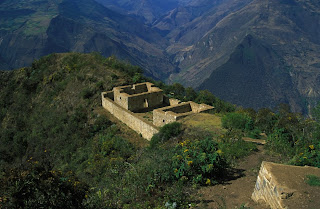
1. Choquequirao- Perched on a saddle between stunning Andean peaks, Choquequirao (or “Machu Picchu’s Sacred Sister”) is the type of trip your guides really want to do. The ruins are accessible only by foot which limits traffic and enhances the mystique of this amazing site. You'll most likely find yourself the only tourists exploring the vast complex of ruins and camping beside the site (can't do that at Machu Picchu).
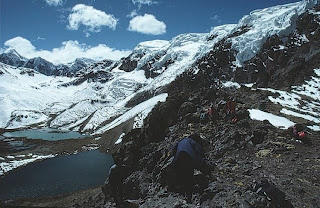
2. Cordillera Blanca / Huarez- Where true trekkers get their kicks in Peru. The breathtaking peaks are reminiscent of the Himalayas. Mountaineers and inexperienced trekkers can both find a variety of challenges.
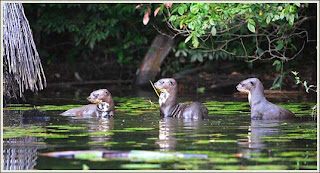
3. Manu- This national park boasts the highest bird, mammal and plant diversity of any park on earth. A spot for people who can forgo a few comforts for one the finest rainforest experiences anywhere.

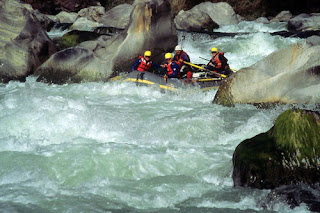
4. Apurimac River- Considered one of the world’s top ten rafting rivers, the Apurimac cuts through canyon walls twice as deep as the Grand Canyon and offers exciting rapids. A great choice for a shorter rafting trip.
5. Kuelap and Chachapoyas - Kuelap is just one of the many astounding archaeological testaments to a mysterious pre-Incan civilization in northern Peru. The site’s vine draped, towering walls rival the grandeur of even Machu Picchu. The surounding area is dotted with charming Andean towns like Chachapoyas and is criss-crossed by ancient footpaths you can still trek today.
1. Choquequirao- Perched on a saddle between stunning Andean peaks, Choquequirao (or “Machu Picchu’s Sacred Sister”) is the type of trip your guides really want to do. The ruins are accessible only by foot which limits traffic and enhances the mystique of this amazing site. You'll most likely find yourself the only tourists exploring the vast complex of ruins and camping beside the site (can't do that at Machu Picchu).

2. Cordillera Blanca / Huarez- Where true trekkers get their kicks in Peru. The breathtaking peaks are reminiscent of the Himalayas. Mountaineers and inexperienced trekkers can both find a variety of challenges.

3. Manu- This national park boasts the highest bird, mammal and plant diversity of any park on earth. A spot for people who can forgo a few comforts for one the finest rainforest experiences anywhere.

4. Apurimac River- Considered one of the world’s top ten rafting rivers, the Apurimac cuts through canyon walls twice as deep as the Grand Canyon and offers exciting rapids. A great choice for a shorter rafting trip.

5. Kuelap and Chachapoyas - Kuelap is just one of the many astounding archaeological testaments to a mysterious pre-Incan civilization in northern Peru. The site’s vine draped, towering walls rival the grandeur of even Machu Picchu. The surounding area is dotted with charming Andean towns like Chachapoyas and is criss-crossed by ancient footpaths you can still trek today.
 |
Friday, July 10, 2009
Why it's smart to travel during a recession

Recently, when I tell people I work in the travel industry, they give me a pat on the back and ask if I've applied for unemployment yet. What I tell them surprises them as much as it's been surprising me: people are still traveling, even during a recession. After all, there are some really excellent reasons to travel-- even if the economic news is disheartening or scary. Here are the reasons I give for why international travel hasn't completely dried up, and why more people should travel during a recession:
1. More Deals Than You Can Shake a Stick At: Once out-of-reach destinations may be more reasonable with reduced airfares, hotel rooms and tours. Also, you can feel a little bolder asking for deals, even if they're not advertised. Keep in mind that you shouldn't push for an unreasonably low price; after all, the tour guides still need to feed their families too.
2. No More Lines: If you've been avoiding traditional destinations for fear of the Disneyland crowds, this is your year to travel. It's easier than ever to find a deserted beach in Costa Rica or hike the Inca Trail without seeing another group of hikers for days.
3. Supporting Local Economies, securing jobs: According to world tourism experts (specifically the World Travel and Tourism Council), the international tourism industry is expected to shrink 3.5% by the end of 2009 and 10 million jobs related to tourism will be lost worldwide by December 2010. If you think taking a vacation is selfish, remind yourself that you'll be providing work for folks that need it. If you want to make sure your valuable travel dollars are going to the right places, make sure your trip is being provided by a reputable local operator that pays a fair wage to all its employees.
4. We're Rethinking Value: When money starts to get tight, we begin considering what's truly important and spend a little more wisely. We're looking for things give us real value, like more time with family or memorable experiences. I don't think most people cherish the memory of using a spiffy new iphone, but we remember that surfing trip we took with our best friend or that unexpectedly beautiful hike in a new country.
So while the global economic outlook isn't sunny, there are still many good reasons to travel and it may even be the best time to do so.
Friday, June 26, 2009
Peruvian Amazon spared from environmental destruction
The Peruvian Amazon has been spared this month from massive environmental damage, thanks to the public outcry and protests of brave Peruvians.
From the New York Times:
"Peru’s Congress on Thursday overturned two decrees by President Alan García that were aimed at opening large areas of the Peruvian Amazon to logging, dams and oil drilling but set off protests by indigenous groups this month in which dozens died.
From the New York Times:
"Peru’s Congress on Thursday overturned two decrees by President Alan García that were aimed at opening large areas of the Peruvian Amazon to logging, dams and oil drilling but set off protests by indigenous groups this month in which dozens died.

The move appeared to ease tensions with the indigenous groups, which had continued with their protests and road blockades in parts of Peru despite Congress’s decision to suspend the decrees last month. After the vote on Thursday, however, some indigenous leaders said they would lift the scattered blockades and halt the protests.
“Today is a historic day for all indigenous people and for the nation of Peru,” said Daysi Zapata, a leader of the Peruvian Jungle Inter-Ethnic Development Association, a group representing more than 300,000 people from Peru’s indigenous groups.
The apparent end to the impasse came after at least 24 police officers and 10 civilians were killed in clashes and acts of retaliation in northern Bagua Province, some of Peru’s bloodiest political violence since a two-decade war ended in 2000.
The decrees, issued by Mr. García as part of a regulatory overhaul for a trade deal with the United States, were intended to open parts of jungle to investment and allow companies to bypass indigenous communities to attain permits for petroleum, biofuels and hydroelectric projects.
Other disputed decrees by Mr. García remain in effect, raising the prospect of new protests. Still, Mr. García acknowledged in a speech late Wednesday that his government had made a crucial mistake by not including native groups in discussions over the decrees before he issued them.
The repeal of the decrees and the apology by Mr. García open a new phase of uncertainty in Peru, where economic growth is sharply declining amid a decline in commodities prices."
Written by Simon Romero
Published on June 18, 2009
Wednesday, June 24, 2009
Tips on choosing your South American trek

With summer here, you're probably breaking in your new hiking boots and dreaming about where to take your next adventure. Of course, planning any international trekking adventure takes a bit of perseverance but it shouldn't be harder than the hike itself. Make it a bit easier for yourself by following these tips from Detour:
1. Make sure you have a local guide. Naturally, a trained local guide is usually your best bet for any international trek; after all, who better to explain the intricacies of Peruvian culture, history, geography, and politics. Also, if you're paying a local, it means that the revenue generated from your trek stays in the community you're visiting. Many international outfitters use guides from the US or the EU, so be sure to ask about this one.
2. Figure out what you want. This tip may seem obvious, but a lot of people sign up the most famous trek in the area without considering if it truly suits them. The first step for planning a trek is honestly assessing what you really need, be it uncrowded trails or support horses in case the kids poop out. After you suss out these details, it's much easier to sift through your trek options.
3. Find out what treks the local guides or operators prefer. Guides generally enjoy treks for the same reason travelers do: beautiful scenery, good itinerary, and trails free of human waste. While this may mean you're going off the beaten path, keep in mind that most famous sites (Machu Picchu or Torres del Paine peaks) can be visited with a quick day-trip afterwards. The easiest way to find these recommendations is by contacting a Detour specialist who can give you insights into what the local guides prefer.
4. Want a budget trip? To get a good rate on a trek, try thinking outside the box. Think about traveling during the shoulder season, which is the time between the busy and the off-season. Consider a shorter version of your ideal trek. Importantly, be flexible about your travel dates. If you want to join a group departure (one of the best ways to save money), you may have to reorganize your dates to join-up with a group.
5. . . . But don't go for a price that seems too good to be true. Once you get a sense for the price range of a specific trek, don't try to drive the price down further or purchase a trip that's half the price of the others. Treks cost money to operate well so a super-cheap operation will be cutting corners they probably shouldn't. Before booking that $100 Ausangate trek, consider how you'd feel if there wasn't enough food one day or if your porter were working for slave wages.
More tips coming soon, so keep checking back while you plan your trek.
Subscribe to:
Posts (Atom)

 Posts
Posts

